Sunday, November 22, 2020

Corona Daily 259: How Lockdown Affects Our Memory: Part IV


Earlier, I talked about people in lockdown unable to remember today’s date or day. It happens even to those working online. Why?

We usually follow two systems – a 24-hour clock and a 7-day week. The twenty-four-hour clock is natural, biological, the time earth takes to rotate around its own axis. The seven-day week is completely artificial, man-made. We could have constructed a week with 5 or 10 days as easily. Then we split the 7-day week into weekdays and weekend, to denote work and rest. The two-day weekend is an outcome of another historic crisis, the Great Depression. US president Herbert Hoover, instead of laying off thousands of workers, decided to reduce the working week to a 5 day-40-hour week. (I recommend the world uses the pandemic to reduce the week to 4-day-20-hours. We have an incredibly unequal situation with some of us overworked-from-home, and others out-of-work).

The time system is relatively new. In 1883, the USA had 300 different local sun times. Only the following year, a global 24-hour time zone system was introduced with the adoption of GMT.

Our memories and our life are built around these time systems. As a child, my Sunday mornings were defined by my dressed-up Catholic neighbours leaving for church.

*****

Psychologists talk about the concept of “time stamping”. A young baby lives in the present. She cries when hungry, she smiles when happy, but she has no concept of the future. As we grow, we start time stamping our biography. Our life memories have associations with public and personal events. Our past connects us to the future. Aristotle described memories not as archives of our lives, but as tools for imagining the future. People who hate their jobs imagine their wonderful post-retirement life.

*****

As we have often experienced, time is relative. Chatting with your girlfriend/boyfriend for 20 minutes is much shorter than waiting in a queue for 20 minutes.

When we return home from a 10-day exotic holiday, it feels like we spent 30 days out. Because everything was new and exciting. In the lockdown, it is the reverse. Eight months in lockdown feel like 4 months or less. Because all days are like one another. Catherine Loveday, professor of cognitive neuroscience at the University of Westminster compares it to “playing a piano that has no black keys to help you find your way around.”

***** 

Cutting short our future horizon is a great shock for our cognitive ability. For the past several years, by December, I had confirmed my family’s travel plans for the next summer (school holiday), with all bookings done. This November, I know nothing. It’s like a driver on a long journey suddenly reaching a dead end.

Lera Boroditsky, a researcher says roughly half of us see the future coming towards us, while we are static. The other half sees themselves moving towards the future. To find out which group you belong to she asks a simple question: “Next Wednesday’s meeting has been moved forward two days. What day is the Wednesday’s meeting now?”

The static lot, who wait for the future to come towards them, answer “Monday”. Those moving towards the future answer “Friday”. The study found the answer may defer based on the context. In airport departures, bored and waiting, people tended to answer “Monday” more, while in arrivals, moving and active, people answered “Friday” more often. Psychologists wonder if in the lockdown, many of us will become Monday people waiting for the future to come to us.

***** 

Time is an intrinsic part of our cognition. Losing a sense of time can result in losing a sense of self. Our personal identity is built over time, the fourth dimension if you like. We have developed a time structure to stamp our past and future. Without structure, people can go crazy.

Tomorrow, in the final chapter on “Memory”, I will discuss the possible remedies to minimize the damage, to keep ourselves sane.

Ravi 


Saturday, November 21, 2020

Corona Daily 260: How Lockdown Affects Our Memory: Part III


Psychologists research something or the other all the time. Once the pandemic is over, there will be a torrent of studies comparing our memories before and after the pandemic. For the time being, in a survey conducted by the Alzheimer’s Society, half of relatives said their loved ones’ memories had gotten worse since they went into isolation. At the other end is a species possessing HSAM (Highly Superior Autobiographical Memory).  They can recall the weather on a particular day eight years ago, what they were wearing, what they ate and whom they met on that day. The monotony of quarantine is dulling their recall faculty as well.

*****

Episodic memory is our memory of every day events. Those working at a corporate office know its social club aspect. We talk to the family at home, colleagues at the office, friends outside, and people or strangers at parties. Episodic recall starts with something like ‘… you know what happened yesterday….’

My father who is 86 years old meets his friends at a local park every morning. In the evening, he has a drinking club with members’ ages ranging from 25 to 86. In between, he has us, his family. He has been telling stories and anecdotes his entire life. His memory is fantastic, because he has told every story hundreds of times. Last year, I wrote an article describing his chatting groups. It appears prescient now, with me explaining why virtual meetings can never replace real conversations.   

In 2009, as an experiment I played a lead role in a full-length amateur play. I was not looking for a new career. I was merely curious to know how actors remember the entire script. After rehearsing it for two months, I didn’t miss a single line.

Our episodic memory is about recalling a specific event or experience. Some may be better, some not so good, but all of us are inherently storytellers. Now, with no events, no birthday parties, no office gatherings; there are no episodes, no stories. Making new memories is one problem. And in isolation, there is no new person we can tell the story to. When theatre actors don’t perform in a certain play, the dialogue memory starts decaying.

*****

Flashbulb memory talks about a memory of an emotionally charged moment. It could be of a public event such as the 9/11 terrorist attack. We remember who gave us the news first, the setting, and most of our activities on that day. Death of somebody close is always emotionally charged and creates flashbulbs. Though we are not Federer or Nadal, each of us has our moments of triumph in life. We remember them vividly. The setting, people around us, the way we smiled. It can be a photo or a short video.

I don’t think in a lockdown and in-home isolation, flashbulb photography happens. You need ambience, people around, and a supercharged emotion. I can’t recall a single flashbulb memory from skype or zoom.

*****

In another research, scientists found we gossip for 52 minutes every day - mainly talking about someone who is not present. The scientific study had attached to the participants portable recording devices (with permission), and later analyzed the conversations. It was not all negative, much of it was non-judgmental chitchat.

It is human to gossip. A and B can talk about C in his absence, but equally A and C can talk about B, and B and C about A behind their backs. Gossip is a psychological need, and it is actually healthy to spend those lovely 52 minutes every day.

That is another lockdown casualty. On Zoom, you will not gossip about your boss, because the boss may have access to your chat. Gossip requires privacy and confidentiality. Virtual platforms don’t offer either.

*****

Memory is a vast ocean. More on it tomorrow.

Ravi 

Friday, November 20, 2020

Corona Daily 261: How Lockdown Affects Our Memory: Part II


Many of us have been exposed to the concept of “short-term memory” through games or experiments. Our short-term memory can usually retain around five to seven things at a time. During the lockdown, I have been doing the groceries for my parents. Over the phone, as my mother’s list extends beyond five items, I start noting them down. I don’t want to tax my brain. I don’t think anyone tries to remember ten-digit mobile numbers anymore. They are too long.

An Australian psychologist John Sweller had developed the Cognitive Load Theory (CLT), which may explain why our minds and memory can be in a mess during pandemic times. When we are dealing with a task or working on a problem, particularly an unfamiliar one, we depend on our “working memory”. Working memory has limited capacity. When you are an expert at a certain task, most of what you need to know is stored in the long-term memory, and you can complete the task on auto-pilot. For a new or unfamiliar task, you depend on your working memory.

As the lockdown began, our part-time maid stopped visiting our house. My wife, daughter and I split her tasks amongst us. Putting up the washing to dry on ceiling-high rods became my responsibility. (This skill doesn’t require a doctorate.) In the first few weeks, I realized that my running dry-fit clothes were slipping from the aluminum rod. Like a circus artist, sometimes I had to try many times before hanging a slippery t-shirt. I was using my working memory, taking an extra cognitive load. Our semi-literate maid is an expert, and her hands do the job without taxing her brain.

Pandemic plays havoc on our mental function by taking us out of our auto-pilot zone. Women are great at multi-tasking. With a dish in the microwave, clothes in the washing machine, a woman may quickly add a few likes on FB, watch a WhatsApp video and giggle, and keep an eye on the TV. Now suddenly her two children are attending school on two laptops. They must be fed at lunchtime. Instead of escaping to the office, she has to worry about the planned Zoom call, and wonder if the Wi-Fi, laptop and Zoom audio will all work as required. All these routines are a great burden on the limited mind capacity, causing utter exhaustion. In many activities, we are like novices, not experts.

*****

Research has shown that anxiety and stress further reduce the working memory capacity. A bright student performing badly due to exam nerves is a good example. Pilot of a passenger plane, and pilot of a military fighter plane share the same basic technical competencies. But in a war zone, the fighter pilot is super alert and under constant pressure.  

In the pandemic, we are like that fighter plane pilot.

*****

We usually can cope up with a new situation, develop expertise, reduce load on the working memory. I can now hang clothes proficiently. But the novel pandemic disruptions are unstoppable.

Earlier, when leaving the house, we carried a wallet/purse, handkerchief, house keys, car key, mobile. In most cases, this was a matter of reflex with no load on our memory. Now we have to carry a mask and wear it. Some carry a sanitizer bottle. By the time we practiced and remembered to wash surfaces, door handles, vegetables, coins; it transpired the virus may be transmitted through air in badly ventilated enclosures. It is a strain on our memory to forbid our reflexes to shake hands or hug.

*****

It is important to be aware of the activities and anxiety that are loading our limited cognitive capacity.  I will discuss in another part the remedial strategies to reduce that burden.

Ravi 

Thursday, November 19, 2020

Corona Daily 262: How Lockdown Affects Our Memory: Part I


In the last few months, some of my friends have wondered if their memory is getting worse. Talking about myself, I can’t confidently say the date unless I check it. In the B.C. (before coronavirus) era, I was good at knowing today’s date precisely. On the other hand, I still know the day of the week exactly. (Later this week, I will explain why.) Many people struggle when asked: What’s the day today? This week, I will try to list the different ways in which our memory can get affected in the lockdown and why. 

*****

Places play a big role in our memory. If you visit your school after many years, and take a walk inside, memories will come flooding in. Just as if those files were lying dormant in your brain, reactivated by the visit.

I had a strange experience in my twenties. I was living and working in Moscow. Only landlines existed then, with six-digit phone numbers in Bombay, and seven-digit numbers in Moscow. I was proud of my memory, and never wrote down a single number. Though not a switchboard receptionist, I easily remembered more than a hundred numbers each in Bombay and Moscow. International calls were very expensive. One year when calling became cheap following the Rouble’s collapse, I decided to call my Indian friends from Moscow. But as I started to dial with the receiver in hand, I was fumbling. Other than my parents’, I had difficulty recalling most numbers. However, when I returned to Bombay, I could recall all Bombay numbers with precision. Now the Moscow numbers had become foggy.

*****

In the last nine months, I have slept every night in the same house, in the same bed. It must be a personal record of some kind. Cognitive psychologists talk about the lack of cues to aid our memory. If you work in an office, there is the journey from the house. Whether you drive or use public transport, there is a change of scenery. The lift, garage, car, metro, trees on the street, building security gate, coffee machine in the office, all of them are daily milestones. I am not even talking of the people, the enormous number of strangers you come across in public transport, or while walking on the street. You may think of the commute to office and back as hell, but what it does is to train your memory all the time. With each place, some memory files are getting added to your brain. Your brain absorbs the background colours, the giant hoardings, the expressions of fellow travellers. Even when you know the names of all stations on your underground line, every time you travel, the names get reinforced in your memory.

Now, people working from home are in one place. The desk, the chair, and the computer screen. Little wonder the location-related memory power is inactive. The brain is not expanding.  

*****

Our brains have a seahorse-shaped component called the Hippocampus. (In fact, that’s the Greek word for seahorse). Thanks to the Hippocampus, we are able to find our way back home when we go out. This spatial ability, the skill to navigate is a critical memory function.

Some veteran London Black Taxi drivers boast of knowing every small lane in London. To verify this, one study actually invited them and scanned their brains. Without fail, all those drivers had much larger hippocampi compared to the average Londoner. People who for convenience use GPS or similar SatNav don’t allow their hippocampi to expand.

In one research neuroscientists found that if people’s lives become more confined and repetitive as they age, their use of the hippocampus decreases. The study didn’t see the current pandemic coming, but its conclusion is applicable to all of us, irrespective of age. In the lockdown, our use of the hippocampus is decreasing.

More on the subject tomorrow.

Ravi 

Wednesday, November 18, 2020

Corona Daily 263: A Horror Movie that Never Ends


INT DAY: EMERGENCY ROOM IN A SOUTH DAKOTA HOSPITAL (NOVEMBER 2020)

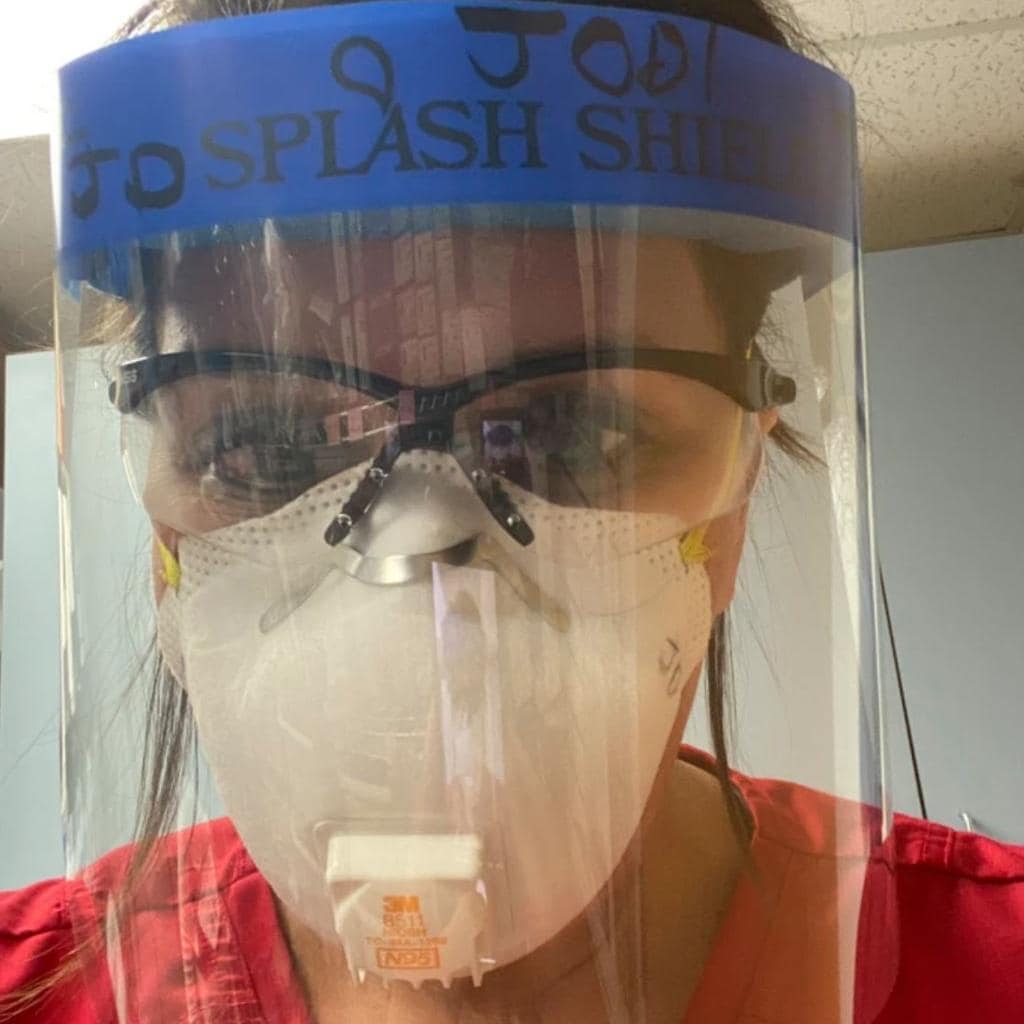
A patient Mr G with an oxygen mask on. He is trying to yell through the mask. Jodi, the emergency room nurse, is checking the various parameters on the screen. Wearing a PPE, only her eyes are visible:

MR G: Nurse, when will the hospital tell me what’s wrong with me? By the way, why don’t you take that stuff off… it’s like those Muslim women you know…. So difficult to talk with you.  

JODI: You’ve been told. You had breathing difficulties, you tested positive, that’s how you landed here. You’re lucky, the hospital has no free beds any more.

Mr G: I’ve had the flu before. Nobody ever took me to a hospital for flu. A friend was saying they give oxygen to pneumonia patients.

JODI: (Takes the patient card and shows to him): It’s Covid. You should rest.

Mr G: Come on. You know and I know there is no such thing. Don’t know who started it, maybe Bill Gates. Maybe China’s plan to topple our president. Every year flu happens, people get sick, some die. Did anyone ever ask us to wear masks? Stop working? Don’t keep saying Covid, Covid… I’m sick of hearing it.

JODI: Well, you know, I’ve been working in this awful dress every day, for 16 hours a day, haven’t taken an off for the last six months. I go home, put all clothes in the laundry, take a shower. Then horrible dreams if I can sleep. Back to hospital. I have no time to have proper meals. And you think this is all some kind of a hoax?

Mr G: Nurse, may I ask who you voted for? I hope not for that horrible man – Biden. He’ll ruin America, absolutely. We were doing so well, the greatest economy in the world, and then this conspiracy. Who did you vote for? Are you a Democrat? If you believe in this scam, it’s possible you are. Maybe you voted the fraudulent way, sent your vote by mail.

JODI: Listen, you are on 100% Vapotherm. Please don’t talk if it’s troubling you. I can see your oxygen level on the monitor. You need to rest. Already nearly a quarter of a million Americans have died of this virus. It’s real, very real.

Mr G: Our president is wrong. Governor Noem is wrong. And you are right. Wow! Governor Noem, a marvelous lady, she has made sure we in South Dakota remain free. No madness about washing hands with soap, and six feet distance and all that nonsense. If not for the Democrats, and that disastrous Fauci we could have continued with our lives… normally. This is no big deal. I think I have lung cancer and you are trying to hide it from me.

*****

INT: THE SAME HOSPITAL ROOM. LATER IN THE EVENING.

JODI: I’m afraid your oxygen level is very low. We’ll need to intubate you. Would you like to call your family? On Facetime? Talk to your kids? Wife? Friend? Brother? I can help you connect.

Mr G: (hardly audible) No, I’m fine. This is just some little flu.

The Nurse intubates Mr G.

Mr G: (Only he can understand what he says). This can’t be happening. It’s not real.

Saying this, Mr G dies.

*****

This is not a fictional screenplay. Jodi Doering, a South Dakota nurse, first tweeted and then narrated on CNN her experience. Mr G is not an exception, his is a representative case. She has seen hundreds of such cases. Jodi calls this experience “a horror movie that never ends”. South Dakota is one of the worst Covid sufferers. Its governor Kristi Noem, a Trump favorite, attributes the worsening picture to increased testing.

As to why increased testing should result in hospitals becoming full, and a record number of deaths, nobody bothers to explain.

*****

Ravi    

Tuesday, November 17, 2020

Corona Daily 264: Poland -Hungary Oppose the Rule of Law


Yesterday, Poland and Hungary threw the European Union into a major crisis.

Across the world, a rules-based liberal order has been gradually replaced by right-wing populism, conservatism; disregard for truth, decency and tolerance. The EU is the last major bastion of democracy and liberalism. After Brexit, it is still made of 27 different countries, each with its own culture and history. With no powerful head, major decisions must be taken through consensus by all 27 members. Important decisions take months to negotiate.

Since July, the EU leaders have been arguing about a Pandemic stimulus and a seven-year budget. Netherlands, Austria, Sweden and Denmark are EU’s notorious “Frugals” who want to give less, with strict conditions. Managing them is part of Angela Merkel’s skillset. Economists have predicted the worst recession since WWII, with France, Italy and Spain suffering the most.

The negotiations concluded last week with a historic 1.8 trillion Euros agreed as the long-term budget, including 750 billion euros as pandemic help. The hardest-hit members would get grants, rather than loans. Holding the highest standards of democratic decision-making, EU requires not a majority but unanimity. Yesterday, Poland and Hungary vetoed, throwing EU into a crisis. Why did this happen?

*****

Poland was persecuted by Nazis, materially ruined by the Soviet Union, and resurrected by the European Union. I worked as a volunteer in Communist Poland in 1987, and then lived there between 1999-2002, when it was an aspiring EU member. Based on my experience, I always offer Poland as the best example of what political unity and removing of borders can achieve. Transformed beyond recognition, Poland in the twenty-first century became a very civilized place to live in.

In the last five years, it has been run by the Law and Justice (PiS) party, the name a perfect misnomer. PiS has tried to strike at the independence of media and judiciary. Andrzei Duda, the president who won a narrow victory this year, promoted hatred for gays, Jews and the liberals who supposedly conspire with foreigners to destroy Polish culture.

When PiS came to power, it tightened its grip on the state TV network TVP, national news agency PAP, and Polish Radio. They now broadcast round-the-clock propaganda.

Three weeks ago, in a choreographed move, America signed with 30 countries an anti-abortion declaration. The only European signatories were Belarus, Poland and Hungary. This was followed by the Highest Court of Poland introducing the toughest anti-abortion laws. Women went on protest marches across Poland.

*****

Viktor Orban is Hungary’s de-facto dictator. Over the past ten years he has abused the rule of law, the independence of judiciary and the rights of minorities. On one hand, he runs a “Stop Brussels” campaign, compares the EU to the USSR; on the other hand, uses EU as the cash machine. Orban’s family and friends routinely win EU-funded infrastructure contracts.

*****

Imagine EU as a school class teacher, with Poland and Hungary as two absolutely unruly boys. She should punish them or throw them out of the class. The punishment starts with a loss of voting rights, then sanctions, and the unlikely scenario of expulsion from the EU.

Poland (in 2017) and Hungary (2018) are the only two countries EU tried to punish for undermining the judiciary’s independence. Because of the unanimity principle, both attempts were foiled. Hungary and Poland vetoed to protect each other.

*****

The Frustrated EU has now tried to link the budget and Pandemic stimulus to “the rule of law”. In other words, money can be withdrawn from countries not following “the rule of law”. Poland called such linking political enslavement. Hungary termed it as attacking its sovereignty. They will not let the budgets pass until the “rule of law” is removed as an obligation. European parliament, the final authority, has said it will not pass the budget if “rule of law” is removed.

Two rogue governments, of Hungary and Poland, now hold hostage the needy population of EU.

Ravi 

Monday, November 16, 2020

Corona Daily 265: Asia Unites without India


Yesterday, on a virtual call hosted by Vietnam, fifteen Asia-Pacific countries formed the world’s largest trading bloc, bigger than the European Union. The diverse composition included: China, South Korea, Japan, Australia, New Zealand, Singapore, Brunei, Cambodia, Indonesia, Laos, Malaysia, Myanmar, Philippines, Thailand and Vietnam. With 30% of the world’s population and GDP, the block targets to eliminate 90% of duties over the next twenty years. This was China’s first ever multi-lateral trade agreement. Japan and China came together in a bloc for the first time. The fifteen countries were keener to sign the RCEP (Regional Comprehensive Economic Partnership) because their economies are severely affected by the pandemic. The agreement was negotiated with blood, sweat and tears as described by Malaysia’s trade minister. The negotiations had started in 2012, and other than China, the most important member was expected to be India.

*****

A year ago, India decided to withdraw. India feared cheap goods from China flooding the Indian market, further widening the trade deficit. Dairy products coming from New Zealand would be so cheap as to threaten the livelihood of Indian dairy farmers. Narendra Modi invoked Mahatma Gandhi in his withdrawal announcement. Gandhi had advocated a self-reliant India with an aversion to foreign goods. This was pre-independence. After 1947, India adopted protectionism that caused substandard products, red tape, excessive duties and consequent smuggling until 1991. As the experience of communist countries showed, the fantasy of self-reliance usually ends in self-destruction. This is even more relevant in 2020. Supply chains are now global. Every time there is an opportunity to remove a border, a nation should pounce on it.

*****

India has been negotiating this agreement for seven years. China’s strengths are well known. There is nothing intrinsically wrong with having a trade deficit with China, every nation does. “Made in India” no longer means developed by Indians. My Nike shoes are made in Laos or Vietnam, they can be made in India in a trade-friendly environment. I-phones can be assembled in India and exported all over the world. The strongest point of this agreement is the unified “rules of origin”. If components are made in any of these fifteen countries, the final product will be eligible for the lowest duties. India now misses on it by being outside.

The threat of 5% dairy products from New Zealand ruining the other 95% is beyond my understanding of economics. If New Zealand can consistently supply milk powder at half the Indian rate, can someone please explain why.

The agreement offers each country a flexibility to specify protected items. Japan will maintain high import duties on “politically sensitive” agricultural products. Surely, India could have done the same with dairy products. If the intent was to join the agreement, this is a surprising failure of negotiations.

The more likely explanation is reverting to protectionism and mixing business with politics. Trump’s America first and withdrawal from the Trans-pacific partnership seems to have been photocopied by India. The USA and India share their dislike for China. But sustained enmity with a neighbour is a bad policy. Being part of a trading bloc could improve India-China relations. This agreement was a small step in an eventual grand single Asian market.

*****

India’s decision is perplexing. The parties are given two years to ratify the agreement in their parliaments. India’s signing could have allowed the parliament and public to better debate it. India could have joined yesterday’s engagement ceremony, and refused to marry later, or divorce if the marriage didn’t work. The step to run away before the engagement is timid and embarrassing.

Ravi    

Sunday, November 15, 2020

Corona Daily 266: The Most Disadvantaged Negotiator


Expressions like ‘a great loss’ or ‘a void’ are often used when a well-known person dies. Most such tributes are a matter of protocol. The obituary doesn’t mean what it says. That was not the case with Saeb Erekat, the secretary general of the PLO (Palestine Liberation Organisation), who on 10 November died of Covid-19.

Saeb Erekat, 65, was better known as the Chief Palestinian Negotiator. For the last thirty years, he was part of every negotiation. He was a spokesman, and the single-point organizational memory of the whole negotiating process for the Palestinians. Against all odds, he had managed to leave Palestine for a university education. He was fluent in English following his double graduation in the USA and doctorate in the UK. He was also articulate and witty.

“I try to understand the Israelis’ fears and aspirations, but they can get too complicated for me. Every day, there’s something going on, like the cats outside my window at night, and I never know if they’re making love or fighting or both.” He said in an interview.

Fighting against an occupying, land-grabbing Israeli state, supported by its veto-powered sponsor USA, Erekat was dealt a bad hand. He called himself “the most disadvantaged negotiator since Adam negotiated with Eve.” (My detailed five-part series analyzing the history of the Israel Palestine conflict is here: 1, 2, 3, 4, 5. It explains how Israel is an occupying power engaged in modern apartheid).

Though Israeli politicians and population thought of him as firebrand, Erekat supported peace and non-violence. He was the man in a suit carrying a briefcase, making his arguments rationally, and sticking to his demands with little bargaining power. He was instrumental in negotiating the Oslo accord (1995), Hebron protocol (1997) and the Wye river memorandum (1998), all three of them transferring some Israeli-controlled territory to the Palestinians.

“As a Palestinian father,” he repeatedly said, “I want my children to be journalists and schoolteachers and professors and musicians. I don’t want them to be suicide bombers. But in order to do so, I need to provide hope that they will live in freedom away from occupation.”

*****

More than a month ago, he tested positive for Covid-19. As someone with a lung transplant, he was in the high-risk category.

When an ambulance carried him to the Hadassah Ein Karem hospital in Jerusalem, protestors gathered outside. “Let him die” read one poster. Social media champions on both sides called him a ‘hypocrite’ for taking treatment from the enemy. (Palestine doesn’t have a hospital which could have treated his condition). Newspaper columnists openly condemned hosting an enemy and treating him. Some people accused Erekat of occupying a bed that an Israeli patient could have had.

Fortunately, Israel still has people who can deal with others as human beings. Israeli negotiator Gilead Sher called Erekat a respectable, remarkable human being. The hospital director emphasized a ground reality, “We have Arab doctors and Jewish doctors, Arab nurses and Jewish nurses taking care of all patients without fear or favour.”

Erekat’s hospital treatment needed approval from the Israeli government. Some parliament members asked Netanyahu to negotiate concessions in exchange of treatment. Benny Gantz, the defence minister, ignored his colleagues and decided to allow unconditional care for Erekat.

Enmity and hatred are amplified by politicians, not citizens. On Erekat’s death, neither Benjamin Netanyahu nor the Israeli President Reuven Rivlin offered any condolences, not even a tweet.

*****

Mahmoud Abbas, the Palestinian president, is 85 and not in good health. Saeb Erekat, twenty years younger, had an excellent chance to replace him. With Biden replacing Trump, hopes for a Palestinian state could have been revived. Instead, the ailing Abbas himself will now replace Erekat as a negotiator.

Erekat falling a victim to Covid-19 is a true tragedy for the Palestinian cause.

Ravi   

Saturday, November 14, 2020

Corona Daily 267: Denmark’s Mink Variant


Last week’s news from Denmark may either be very significant, or may turn out to be nothing at all.

In ‘Bye Bye Mink’ I had talked about minks getting infected and dying on the breeding farms. Netherlands has decided to end the mink industry in 2021. Six countries had earlier reported outbreaks on mink farms: Denmark, Netherlands, Sweden, Spain, Italy and the USA. Yesterday, Greece joined with infections on two farms.

Denmark is the world’s second-largest exporter of mink fur, after China. It accounts for nearly half of the 35 million minks farmed in Europe.

Initially, Denmark had decided to cull (kill) all minks on the infected farms. Then on 7 July, it decided to isolate them with strict hygiene rules. A humane decision, but probably a blunder. The virus struck back with renewed vigour. By 6 November, 216 farms were infected.

The infected minks have now passed on the virus to 214 humans, a reverse zoonosis. The age range of the infected Danes is 7 to 79 years. Twelve cases have a unique variant.

*****

Years ago, I had read about a linguistic experiment. A reputed university had asked various bilingual translators to translate a story sequentially. For example, the English-Mandarin translation was followed by Mandarin-Spanish, Spanish-Hindi, Hindi-Arabic, Arabic-French, and back into French-English. The translators were professional and well qualified. Still, the first and the final English versions were dramatically different, in some parts the story becoming unrecognizable.

It is similar with the coronavirus. If it was transmitted from bats to humans (not confirmed), then humans to minks, and back from minks to humans, it can change significantly. The mutation may not be more contagious or lethal, but it may make the vaccines ineffective. The worst-case scenario is the Denmark Mink variant starting to spread globally, and causing another pandemic. It’s too early to panic, Denmark hasn’t yet shared the variant’s genetic data with scientists. If the variant is not too different, vaccines can be tweaked. Flu vaccines are altered every year to counter mutations. And Denmark will try to kill the variant before it leaves Denmark’s borders.

*****

With that in mind, Mette Frederiksen, Denmark’s young PM, ordered culling of all 15 million minks across the country. Skins and furs from healthy minks from non-infected farms can be pelted and sold, but all other minks must be buried without skinning. Military would be used for the massive CO gassing operation as well as the mass burials.

Just as the military and farmers were getting ready for the mink extinction project, the opposition objected. Like in most countries, Denmark’s government and parliament are at loggerheads. Frederiksen’s actions were considered illegal. She apologized. It may take some time before compensation to farmers is agreed, the data evaluated and a bill passed to make the culling legal. Meanwhile, the risk exists.

*****  

Terrified by the news, other governments have issued strict rules for arrivals from Denmark. UK refused entry to lorry drivers coming from Denmark. (Good rehearsal for January). All cars, buses and trains from Denmark have been halted within their borders. Plans of the international football teams are disrupted, with eight Premier League stars affected.

*****

Minks belong to the weasel family, that along with ferrets can easily get infected with the coronavirus. Their crowded conditions are ideal for virus spreading. They can become quite sick and die. Fortunately, no other animal has passed on the Covid virus back to humans. If pigs or chicken were to contract it, or transmit it back to humans, the consequences would be apocalyptic.

*****

Do we learn our lessons? Not really. Palm Civet was a suspect source in SARS 2003. It probably was an intermediary between bats and humans. In different parts of Asia, palm civets are now farmed intensively, fed coffee beans, and the beans collected from its faeces make the world’s most expensive coffee, kopi luwak.

Ravi 

Friday, November 13, 2020

Corona Daily 268: Good News from the UK, Finally


Yesterday, UK became the first European country to pass 50,000 official coronavirus deaths. At least 600 Brits are dying daily of covid.

“The milestone was a terrible indictment of poor preparation, poor organization by the government, insufficient infection control measures, coupled with late and often confusing messages for the public.” Said the chairman of the British medical association.

This week is the first of a new 4-week national lockdown. Over the next two months, the pandemic is expected to get worse.

*****

While hospitals get overwhelmed and people work from home, Brexit will happen. From 1 January, UK will be a proud, independent, sovereign nation.

Northern Ireland continues to be a stumbling block. UK wants it to be in the UK and EU at the same time, which is logically impossible after Brexit. Johnson will therefore break a treaty that he signed a year ago. He was hoping for a Trump win, which would make his illegal actions legal. There is a real risk of an EU deal not happening, a hard border inside Ireland, restart of the Troubles, and finally Northern Ireland leaving the UK. Even with a deal, January will be chaotic where the post-Brexit lorry queue is projected to make Kent the Toilet of England.

*****

This week, not deterred by COVID-19 or Brexit, the kingdom announced some inspiring, delightful news.

In 2022, Queen Elizabeth II will complete 70 years of her reign as the British monarch. An extra bank holiday, and a four-day weekend have been announced to celebrate the Platinum Jubilee. This blockbuster, once-in-a-generation show will happen from 2 June- 5 June 2022.

Oliver Dowden, the cultural secretary, said, “Her Majesty’s platinum jubilee will be a truly historic moment, and one that deserves a celebration to remember. We will put on a spectacular show that mixes the best of British ceremonial splendor with cutting edge art and technology. It will bring the entire nation and the commonwealth together in a fitting tribute to Her Majesty’s reign.” England will host the Commonwealth games in Birmingham and the festival of Brexit to showcase the best of Britain.

The Queen hopes that as many people as possible will have the opportunity to join the celebrations.

*****

In a 1947 broadcast the Queen had said,” I declare that my whole life, whether long or short, shall be devoted to your service and the service of our great imperial family to which we all belong.” Now we know her life has been long rather than short.

In the 1960s, an Operation London Bridge plan was created. The plan detailed the actions in the event of the Queen’s death. The monarch’s death is a more catastrophic event for Britain than Covid or Brexit.  “London Bridge is down” was the agreed phrase to communicate her death to the Prime minister. That plan has been scrupulously updated every year, for more than fifty years. Many of the planners are no longer around.

The joyous opportunities for the British people (with the exception of Prince Charles) are unending. In 2024, at the age of 98, the Queen will become the longest ruling monarch ever (beating France’s Louis XIV). In 2026, the Queen turns 100. In 2027, she will celebrate the Palladium Jubilee of her rule.

*****

A committee comprising MPs and Lords has been formed to decide gifts for the queen. In the meetings held this week, the committee acknowledged it was not an easy job.

On 19 March, the Queen left London, and has been living in Windsor Castle in Berkshire. Her absence for eight months was making the Brits uncomfortable, giving them a strange feeling of belonging to a republic.

The Platinum Jubilee announcement and an extra bank holiday in 2022 finally bring cheer to Britain and the whole world.

Ravi