Friday, October 23, 2020

Corona Daily 289: The Gym Rebellion


Outside of UK, the older generation associates Liverpool with Beatles, and the younger with football.  The English people, particularly those living in the Liverpool region, know its never-give-up fighting spirit.

Trying to balance the contradictory goals of containing the virus, and protecting the jobs (eat out to help out), England has attracted the second wave. Alarmed, Boris Johnson issued more rules and restrictions on 12 October. Depending on the level of infection, England is now divided into three tiers – medium alert level, high alert level and very high alert level.

Liverpool was the first place to be put in the most severe tier- the very high alert level. That means people in different houses can no longer meet. Pubs should close unless they serve meals. Creative English people have found a bypass by ordering a slice of pizza or a small dessert, keeping it on the table, and keeping on drinking. There is no standard definition of meals.

The other diktat from Westminster was to close all the gyms in Liverpool.  Unlike USA or India, UK charges fines for breaking rules. Now, not wearing face masks will attract £200 the first time. Fines keep doubling for subsequent offences. If you exclude Boris Johnson, British people believe in the rule of law.

The three-tier system is clearly harsher for the North of England. (Johnson and his cabinet lives in the South). With Brexit, Johnson has managed to break UK away from Europe. Through extreme populism resulting into no deal, he will facilitate the loss of Northern Ireland and Scotland in the next few years. His divisive mind seems to have found North-South of England as the new target.

***** 

Liverpool was ordered to shut down all its gyms. But Lancashire, a few miles away, also in the very high alert tier, was allowed to keep them open. All cities in a tier were equal, but Lancashire was more equal than Liverpool.

The gyms in Liverpool decided not to close. On 14 October, an unnamed member of the public (they exist in every place) called the police and complained about a gym being open, illegally. At 08.35 am, eight police officers carrying firearms entered the Body Tech Fitness Gym. Being English, they were civil. They asked the owner to close the gym immediately, or they would charge a £1000 fine.

A lot of members were training, some running on treadmills. The owner refused to stop their exercise. The police issued a £1000 fine. They would return after three hours, and fine £2000 if the gym was still open. £4000 six hours later.

***** 

An online petition was signed by 400,000 people. (Probably the number of gymgoers in the region). A GoFundMe page was started to help gyms pay the fine. It collected £50000 in one day. Liverpool’s mayor Joe Anderson protested against the closure of gyms. To complicate his life further, on 16 October, the mayor’s brother died of covid-19.

PureGym, UK’s biggest gym chain with seven gyms in Liverpool, decided to take legal action against the government.

A letter was sent directly to Boris Johnson, asking him politely to produce scientific evidence as to why gyms in Liverpool should be shut. In fact, they were essential to keep people fit, fight obesity and improve mental health. Gyms, anyway, were in a bad financial state, having closed for four months during the national lockdown.

******

Boris Johnson and his gang discussed the letter, scratched their heads to find a rationale to shut gyms only in Liverpool, and finally gave in.

From today, all Liverpool gyms will be open legally. The fine charged will be reversed, and the money raised donated to a charity. The rebellion succeeded.

Ravi 

Thursday, October 22, 2020

Corona Daily 290: Disease X


In 2009, a project named PREDICT was launched. Its main purpose was to identify the sources of zoonotic diseases, by studying different places and practices. Wildlife animals should be in the wild. When they come in contact with human beings, it leads to the risk of a deadly pathogen. For ten years, the PREDICT consortium studied biology and the behavior of animals and humans to predict the risk of a spillover of a virus from the animal kingdom into the human race. It was a small but critical health security operation that cost only $200 million over ten years.  In September 2019, the fieldwork stopped, because the Trump administration announced it doesn’t wish to run the project any more. The timing of closing PREDICT was so spooky, no good fiction writer would include such an event in his novel.

But this was only part of the pattern. World Health Organisation (WHO) has been publishing “Pandemic Preparedness plans” each year. After the start of the pandemic, Trump accused it of being corrupt and in China’s clutches. On 7 July, 2020, the Trump administration formally notified the USA was withdrawing from the WHO.

*****    

Why is the USA so important in the world order? For one, it was considered to be the world’s best prepared nation to face a pandemic. It has the monetary and military power, but also a large pool of great scientists. Most international organisations including the UN and WHO have been mainly financed by the USA. As a de facto leader of the world, other nations look at it for guidance in matters such as a global pandemic. With its super-surveillance ability, USA is expected to be the first to learn about a risky virus.

Some people feel it was unfortunate Trump happened to be the US president precisely at the time of the Covid-19 pandemic. The anti-science Trump might have managed to convert SARS or Ebola into global pandemics. A critical element of the strategy is to nip the pandemic risk in the bud. The USA knew the gravity of the novel coronavirus in the first week of January. And yet, in the last week of February, Trump was in India gloating in front of 100,000 people. This month, a detailed post-mortem report has been published about how things managed to go so wrong for the best prepared nation.

*****

The concern is not about Trump, though. Yes, his one-man bullying has exposed big holes in America’s checks and balances. USA is the leader of the free world, or I should say a ‘relatively free world’. With America first or some similar nonsense slogans, the risk is moving that leadership mantle to China. But Trump is likely to be replaced soon, USA will restore its membership of WHO, and the next presidents will hopefully act as adults. The concern is different.

In Feb. 2018, a WHO panel had created a list of pandemic-scale disease threats: Ebola, SARS, Zika… Disease X. That disease X has got a name now: Covid-19.

The global population growth, deforestation, agriculture and mining activities encroaching into animal habitats now make the risk of zoonotic diseases inevitable. It doesn’t have to happen in a Chinese wet market. Man’s incessant encroachment in wildlife is predicted to make viruses jumping from animals to humans a frequent event.

The same WHO list included disease Y and disease Z. That is the reason the world needs to closely study all pandemic preparedness plans. Post-mortem of the current pandemic will not be enough.

Ravi 

Wednesday, October 21, 2020

Corona Daily 291: The Crisis That Came Out of Nowhere


“The crisis is an unforeseen problem that came out of nowhere.” (Trump on 6 March). “We’re having to fix a problem that, four weeks ago, nobody ever thought would be a problem.” (Trump: 11 March) “It’s something that nobody expected.” (Trump: 14 March).

*****

Yesterday, I talked about Event 201, a major pandemic exercise run in October 2019. A month before that the White House economists had published a study that warned of a pandemic disease that could kill half a million Americans and devastate the economy by inflicting a damage of $3.8 trillion. Tomas Phillipson, the Trump administration economist, presented the 41-page report to senior Trump officials. It was ignored, and they threatened to fire Phillipson. Phillipson left his job in June and resumed his teaching role at the University of Chicago.

*****   

Dan Coats, the Director of National Intelligence, presented the threat assessment to Trump twice, in Feb. 2018 and Jan. 2019.

“A novel strain of a virulent microbe that is easily transmissible between humans continues to be a major threat, with pathogens such as the MERS coronavirus having pandemic potential.” He wrote in 2018.

“We assess that the United States and the world will remain vulnerable to the next flu pandemic or large-scale outbreak of a contagious disease that could lead to massive rates of death and disability, severely affect the world economy and strain international resources.” He wrote in 2019.

In July 2019, Dan Coats was fired by Trump through a tweet.

*****

Trump: master of disaster? The president is not ready to handle a global crisis.” I urge you to read this March 2017article by Jeremy Konyndyk, a former director of USAID (United States Agency for International Development), who had handled H1N1, Zika and Ebola crises.

“A major new global health crisis is a question of when, not if.” He says. “Every president dating back to Ronald Reagan has dealt with major and unexpected outbreaks – AIDS, SARS, Bird flu, Ebola, Zika. Fortunately, the past outbreaks were either highly contagious or highly fatal but not both at once. At some point a highly fatal, highly contagious virus will emerge.”

Bush and Obama handled the outbreaks extremely well. Obama had appointed Ron Klain as a full time Ebola czar.

In May 2018, Timothy Ziemer, the top White House official responsible for leading the US response in the event of a deadly pandemic, was pushed out. The global health security team he oversaw was disbanded. Tom Bossert, the White House homeland security advisor, who had called for a comprehensive biodefence strategy against pandemics, was fired.

Konyndyk, the author of the 2017 article, called the firings a rollback of progress on US Health security preparedness. US has actively unlearnt the lessons learned over the last 15 years. The moves make us materially less safe, he added.

*****

Every big corporation has a contingency planning bible. In Obama’s time, a “pandemic playbook” was created for the US presidents. Although they couldn’t have known about Trump becoming a president then, the playbook was an ‘idiot’s guide’ giving step-by-step instructions at the sign of a pandemic. It was not for public distribution, but for the office of the US president. Even a barely literate president should be able to read its forty pages and take appropriate actions.

*****

When you read the above documents, it becomes clear Trump has not read any of them. He is like a person who doesn’t take health insurance, because he has never fallen ill before. Or like a person who refuses to write a will because he has never died before.

More on the subject tomorrow.

*****

Ravi 

Tuesday, October 20, 2020

Corona Daily 292: Event 201


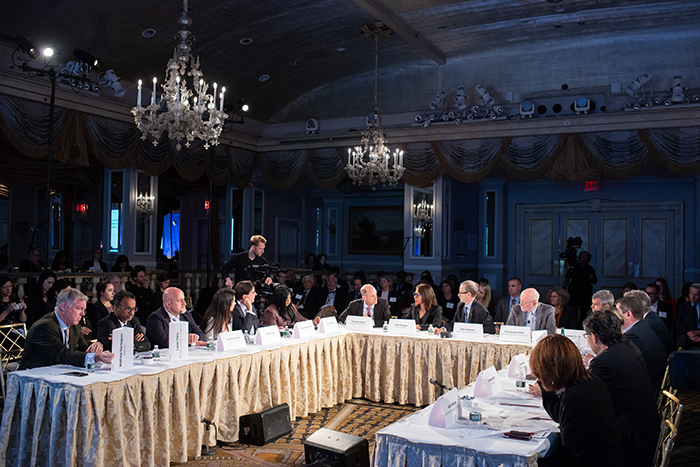
On 18 October, a pandemic discussion took place for three and a half hours at Hotel Pierre in New York. It was called “Event 201”. Three parties jointly hosted it. The Johns Hopkins Center for Health security, the World Economic Forum and the Bill and Melinda Gates Foundation. Bill Gates was not present himself. However, he was represented by one of the foundation’s presidents.

The invite-only event included medical professionals, policy experts, business analysts, people from public health and civil society. Directors of CDC, USA as well as CDC, China (Centers for disease control and prevention) were present. The varied group included directors of Marriott hotels, Lufthansa, Johnson & Johnson, ANZ bank group, and media experts. A select invited audience of 130 people attended. A livestream of the event was available to everyone.  

*****

The group discussed how important it was for governments to join hands with private companies. What should be done with supply chains for rapid and equitable distribution of medical measures. The importance of all countries working together with transport companies to maintain travel and trade. Ways of combating mis- and dis-information. The CDC, China person raised the issue of countering possible rumours that the coronavirus was man-made. All participants agreed consistent health messaging was important. The final recommendation urged international cooperation both in preparing and handling a severe global pandemic.  

*****

Nobody in the hall was wearing a mask. Everyone shook hands. People who knew each other well, hugged. The distance between two panelists was just one foot or so.

Confused? Event 201, the pandemic conference, happened on 18 October 2019, not 2020. The event was held just six weeks before the start of the current pandemic.

*****

Event 201 was a simulation exercise that discussed the dilemmas and a possible response to a hypothetical severe, worldwide pandemic. It talked of a coronavirus that would start in a single country, and then spread across the whole world. The panel feared the pandemic would bring profound economic consequences. Travel bookings would go down by 45%. GDP would be down by 11%, and stock markets between 20% and 40%. Faith in governments would be shattered, and distrust towards social media would grow.

The model projected 26000 deaths after a month, 660,000 deaths after three months. The fictional scenario ends after 18 months, with 65 million deaths.

*****  

It is worthwhile to browse the Event 201 website. So close to the actual pandemic, it provided ammunition to conspiracy theorists. After the actual pandemic started, the Event 201 organisers had to issue a statement clarifying its model was not talking of the covid-19 virus, and that 65 million deaths should not be construed as a prediction.

Since 2015, Bill Gates has been talking about Global Pandemics being the biggest threat. Johns Hopkins had organized similar simulation exercises that portrayed fictional scenarios of a smallpox attack (remember Russia and the USA both still hold live samples of the smallpox virus). In May 2018, an event called ‘the Clade X exercise’ had discussed preventing a pandemic.

*****  

The point is that the Covid-19 pandemic was not as unpredictable or improbable as it is made out to be. In the last few years, the number of viruses causing epidemics has grown dramatically, and averages about 200 a year. Fortunately, none of them had so far caused a severe global pandemic. What if the next virus did? That was why the exercise was called Event 201.

The threat of a pandemic has been at our doorstep for many years. This week, I will write more on the specific warnings and pandemic-prevention-projects that existed.

Ravi 

Monday, October 19, 2020

Corona Daily 293: All of a Sudden


I can name at least five acquaintances who, in the last six months, died of a sudden cardiac arrest (SCA). All of them were between 50 and 60. Since I am in my fifties, I consider that too young to die.

Last month, Dean Jones, 59, a well-known Australian cricketer and commentator was staying at a south Bombay hotel. In fact, I had bumped into him a couple of times on Marine Drive during my morning run. He returned from his run, had breakfast, went to his room, and… gone.

*****

When the global lockdown began at the end of March, hospitals were overwhelmed. Non-essential surgeries were postponed. Private clinics were shut. People stayed at home with untreated ailments.

Cardiologists in Italy, France, New York and other places were stunned at the fall in the number of patients. The Spanish society of Cardiology published a paper showing a drop of 40%. That was only the calm before the storm.

Hospital avoidance by terrified patients had driven the numbers down. Many patients waited for months, and died without going to the hospital. Those with chest pain were tested for Covid-19 rather than an ECG examination.

Italian research showed 58% rise in the out-of-the-hospital cardiac arrests (OHCAs) in February-March. Later months showed a 52% increase. In Paris, the numbers doubled as compared to the average of the last eight years. New York OHCAs were three times higher than usual.

Athletes were not spared either. (In Bombay, one ultra-runner died in his sleep). A July research studied 100 athletes with Covid-19, and found some signs of myocarditis in 60 of them, meaning they had inflammation in the heart muscle, which can in rare cases lead to a sudden cardiac arrest. Some sports organizations now require the players who test positive to undergo comprehensive cardiac testing.

*****

God forbid, if you see someone collapsing, there is a four-point procedure called the chain of survival. (a) Call the ambulance (b) CPR (c) AED (d) professional care.

911 in North America, 112 in Europe, 999 in the UK and 102 in Bombay are expected to send the ambulance as fast as possible.

CardioPulmonary Resuscitation (CPR) is relatively simple. Many YouTube videos show how. By placing both hands on the patient’s chest, you push hard and fast, 100-120 chest compressions a minute. It requires energy. If more than one person is available, they should take turns. (Mouth-to-mouth resuscitation is reserved for children, not adults.)

The Automated External Defibrillator (AED) supplies a dose of electric current to the heart to revive it. This device is designed for lay people who can give first aid. Priced at around $1500, It is now available at airports, hotels, and corporations.

Without CPR, the survival rate in sudden cardiac arrest is 1%. With chest compression started quickly, the survival chance improves to 10-20%. If AED is available and used, chances go up to 30-50%.

The fourth step is to hand over the patient to the professionals in the ambulance.

*****

For a few years in Moscow, I had a Volvo, promoted as the safest car by its makers. Once I saw a red light on my dashboard, but I didn’t know what it meant. The car was running smoothly. For ten days, the light wouldn’t go off, but the car was fine. On the eleventh day, in the middle of a broad Moscow highway, it stopped and went dead.

*****

Sudden cardiac arrests are rarely sudden. European society of Cardiology found that in normal times, more than 50% had visited a doctor or a hospital in the two weeks before the arrest.

In a pandemic, you may postpone a visit to a dentist, but don’t think of postponing heart matters. That can be more deadly than the coronavirus.

Ravi 

Sunday, October 18, 2020

Corona Daily 294: No Bar on Receiving Money


In United States of America, every individual has a right to launch a case against the government. Colin Scholl and Lisa Strawn launched a class-action suit against Steve Mnuchin, the Treasury secretary, and the IRS (Internal Revenue Service). This class action was on behalf of some 1.5 million Americans.

Colin Scholl currently resides at Salinas Valley State Prison. Lisa Strawn at the time of launching the case was incarcerated at San Quentin State prison in California. Understandably, they represented the 1.5 million Americans who are in prisons.

*****

As you know, in March, the USA passed the CARES act (Coronavirus aid, relief, and economic security Act). America’s tax office, the IRS, started sending $1200 to individuals. You may remember my earlier article about 1.1 million dead people receiving stimulus checks.

IRS also stated on its website that Americans in prisons were not eligible to receive the $1200 help. However, by mistake, 85000 prisoners were sent the checks. This was nearly $100 million. Realising the mistake, IRS asked the prisoners to give the money back. (Imagine asking someone in prison to return the money. And if they don’t return it, what are you going to do, lock them up?)

The 85000 inmates who had received the checks were upset. The remaining 1.4 million were upset because they had not received any money. Colin Scholl and Lisa Strawn employed the law firm Lieff, Cabraser, Heimann & Bernstein to file a class action complaint in court.

*****

The IRS website once again confirmed dead people and prisoners were not eligible to get aid. It asked prisons to intercept the payments going to prisoners.

IRS knew the government didn’t want to give monetary help to prisoners. (Most prisoners have no voting rights, why help them?) America can’t be distributing money to murderers, felons, gangsters, robbers, and illegals.

*****

This week, the judge rightly pointed out the CARES act did not exclude prisoners. In 2009, Congress had explicitly excluded prisoners from receiving payments. Therefore, the judge said, it clearly knew how to exclude them. It has actively decided not to do so this time. (For all we know, it may simply be a careless act in Trump’s America).

The judge declared the 85000 can keep the money. And the remaining 1.4 million can apply for the $1200 (the total bill $1.5 billion). Most US prisons don’t allow the prisoners internet access or personal email accounts. Prisoners are now allowed to file a paper application until 4 November. Many law firms will offer free service to prisoners to facilitate the payment.

***** 

Loss of freedom is already a severe punishment. Free people and the State usually think prisoners can be punished endlessly. The majority of US prisoners spend on average seven months behind bars. When they come out, they still must face the pandemic. Inside the overcrowded prisons, for no fault of theirs, they are exposed to a high risk of catching the virus. Disproportionately large number of prisoners are black, Hispanics, poorer and more vulnerable than the average.

Though the Trump administration intends to appeal against the decision, it may cease to exist before a verdict is delivered.

Ravi


Saturday, October 17, 2020

Corona Daily 295: Curfew at Night, Metro by Day


France is the only democratic nation where this can happen.

At the crack of dawn, on Thurs. 15 October, the French police conducted raids on the houses of Edouard Phillippe, the French Prime Minister until July this year; Agnes Buzyn, the health minister at the beginning of the year; Olivier Veran, the current health minister, Jerome Salomon (aka Monsieur Covid),  the Head of France’s health authority; and Sibeth Ndiaye, the French government spokeswoman until July. All of them co-operated with the police. Saloman called the national BFM-TV network and abruptly cancelled his breakfast interview appointment for “personal reasons”. Later in the day, some of them had their offices raided.

Emmanuel Macron didn’t get a knock on the door at dawn, because under French law a sitting president has immunity from prosecution in court investigations launched to uncover ministerial criminal offences.

*****

 In 1993, France created a special court CJR (Court of the Justice of the Republic) to try ministers for administrative and criminal offences committed while holding an office.

After the French lockdown in April and May, complaints started pouring in. Individuals, doctors’ associations, police officers, prison personnel, and relatives of Covid victims accused the ministers of misleading the country. In March, ministers had said “masks were not useful”.  This was to cover up the mask shortage. French people expect high standards of moral behaviour from their ministers. They should have been candid about the mask shortage, people said. Officials and ministers are also accused of inconsistent messages and lack of application of the WHO recommendations.

*****

The second wave of covid has started in France in earnest. From today, Macron has announced a strict curfew from 9 pm to 6 am in Paris and eight other regions, likely to continue till 1 December. Anyone found breaking the curfew will be fined 135 Euro on the spot. Restaurants are frustrated because people must leave as soon as they arrive to reach home before the curfew starts.

At the same time, Jean Lemoyne, the tourism minister, urged people to go on vacation during the upcoming school break to boost the tourism industry.

Contact tracing has been a disaster. In a TV interview, Jean Castex, the current Prime Minister, admitted he had not downloaded the contact tracing app. When asked the name of the app, he misnamed it.

On social media, people have wondered if the virus operates only in at night. “Curfew at night, crowded metro by day”, they laughingly say.

*****

The French court of justice will try all these ministers for “abstaining from combating a disaster” (article 223-7: France’s penal code). The charge requires evidence that the accused intentionally decided not to act in the face of the growing Covid-19 emergency. The charge applies when people are put in danger, or if there is failure to save lives. Investigators must show the actions of ministers were willfully absent, rather than negligence or mistakes.

*****

When reading this news, I simply wondered what would have happened if similar courts and laws had existed in the USA. And if the President of the USA was not immune. What would be the right punishment for deliberate and destructive pandemic management? It is noteworthy that unlike France, USA still retains the capital punishment.

Ravi 

Friday, October 16, 2020

Corona Daily 296: Morning Coffee without Newspapers: Part II


The pandemic began with Beijing censoring Chinese media on the subject. If the press were free in China, it is possible the world would have realized the seriousness of the virus sooner, and saved lives.

Governments, including democratic ones, are using the pandemic as a pretext to withhold information. The ostentatious purpose is not to create panic. The Turkish interior ministry arrested some social media users for spreading fear. In two weeks, its government had to acknowledge the wide spread of the virus. Jordan arrested Roya TV channel’s owner and news director for reporting on loss of jobs. Romanian president signed an emergency decree closing websites of fake news (as defined by the president). Myanmar banned 221 news websites, including its major news outlets. Caixin is a rare investigative group of journalists in China. The Chinese government removed many articles from its website.

One can understand repression of expression under dictatorships. But Hungary is part of the European Union. Its prime minister, Victor Orban, has used the pandemic to rule by decree. Under a new coronavirus law, he is a de facto dictator, right in the centre of free Europe. Hungary’s emergency law now stipulates five-year prison sentences for Hungarians found to be spreading “false  “information.

Tracker 19 launched by Reporters without borders (RSF) offers live updates on the pandemic’s impact on journalism in each country. It is useful to check to what extent our government is attacking the freedom of press this year.

*****

A print journalist has always managed to achieve depths that TV journalists can’t. The newspaper reporter can enter parliaments, courts, police stations, mafia dens with just a pocket diary and a pen. Reporters develop relationships over time, and manage to get off-the-record comments. They can spend months investigating suspected activity. The pandemic has in major ways affected this. Many reporters have lost their jobs. Those retained are asked to change their specialization. Sports journalists have little to do. If you ask a leading sports journalist to report on crime, it is like asking a heart surgeon to become a neurosurgeon.

Reporters can’t conduct confidential conversations remotely. Modern technology instills fear in people wanting to give information online. This has caused further deterioration in the already falling standards of journalism.

***** 

Reading is an effort, much greater than listening or watching. That is why visual media is more powerful than text. Podcasts are now popular, along with audio novels. Attention spans are declining exponentially. One can assume the newspaper industry as we know it will disappear in 20-30 years from now.

Newspapers will be exclusively available online. Articles will be much shorter in length, texts combined with videos. I recommend the Axios news website. Started four years ago, it offers brief, short articles. Its founder wanted it to be a combination of the economist and twitter. Axios is a good example of the shape of things to come.

*****

Newspapers can get rid of their offices, printing equipment, save lots of trees, and make reporters work from home. Like travelling salesmen, they can move to collect their stories. In that sense, it is possible for good journalism to survive. People who enjoy reading newspapers can pay subscriptions. (For the last fifteen years, I have not read a newspaper or a magazine in a paper format. I am a digital subscriber of eight newspapers. By the way, as a measure of compassion, all expensive newspapers in the world have made coronavirus news free-of-cost).

*****

The longer the pandemic continues, the speedier will be the process of digitization of the print media. Those of us who care for democracy and freedom of expression must try to make sure the digital print media remains independent and vibrant.

Ravi 

Thursday, October 15, 2020

Corona Daily 297: Morning Coffee without Newspapers: Part I


The Covid-19 pandemic is perhaps the biggest earth-shattering story in our life. Ironically, there may not be any good storytellers left by the end of it.

I am talking of the print medium - newspapers and magazines. They were already in bad shape. In the USA alone, since 2004, at least 1800 newspapers were shut. In 2008, an estimated 114,000 reporters, editors, photographers and videographers worked for newspapers. By 2019, the number declined to 88,000. The picture is similar or worse in other parts of the world. Earlier, newspapers competed with television, now they face an onslaught from real time viral social media. I don’t think our grandchildren will read newspapers with their morning cup of coffee.

*****

Newspapers survive on ad revenue. Spend on advertising is discretionary, in a pandemic recession you can’t expect companies to take up full-page ads. The national newspapers we receive in the mornings have become much thinner. But the bigger danger is to the local and regional press.

Local newspapers are critical for the community and for democracy. Extensive academic research shows that when a local newspaper dies, civic engagement declines, elected local officials lose their sense of accountability, corruption becomes pervasive, voters lose interest in voting. We now know more about the American presidential election or Brexit, but the potholes on our roads or when our child’s school will reopen is more relevant for us. Only the local newspapers and beat journalists investigating local affairs can offer this information. They are rapidly disappearing.

*****

Judiciary and the press are part of the checks and balances. Judges, as public servants, receive their salaries from the government. Journalists, for the survival of democracy, are as important as judiciary. Unfortunately, the business of news is left to the whims of market forces. Subscriptions can retain the independence of newspapers. But no newspaper can now survive on just subscriptions. Every other revenue source usually results in a loss of independence. The Washington post is a financially healthy newspaper, because it is owned by Amazon’s Jeff Bezos. But can it ever write against Amazon?

*****

Small lifelines have now been offered by Facebook and Google. In the past decade, ad revenue has shifted from press to FB and Google. Google news is simply an aggregator. If newspapers disappear, Google news will be a blank sheet. Google has pledged $300 million to news outlets, FB $ 100 million. This offers some hope for small independent press. But so far, I see reports about closures alone.

The print version of Playboy, now a 66-year-old Playboy, was killed by the Pandemic in March. Rupert Murdoch’s News corporation is in the process of discontinuing dozens of newspapers and the print version of more than 100 community publications in Australia. All thanks to the pandemic. Metro, the free newspaper in England distributed 1.5 million copies every day. It has come down to 400,000. A tsunami of layoffs, cutbacks, furloughs, closures has affected newsrooms across the world.

The printed word, whether in books or newspapers, commands more trust than a WhatsApp message. The decline of the newspaper industry is one reason why the world is becoming fuller of conspiracy theories and fake news.

*****

The mode of delivery and quality of content are two different issues. It is inevitable newspapers in print will eventually move online. That is not the worrying part. The quality of journalism is. More on this subject tomorrow.

Ravi    

Wednesday, October 14, 2020

Corona Daily 298: The Man and the Mountain


Jesse Katayama from Osaka was 25 years old when he decided to travel the world. He was passionate about two things, boxing and teaching boxing. His dream was to open a boxing gym in Japan. A committed young man, Jesse decided he must spend a year visiting different countries and continents, to learn different boxing techniques. The year would also allow him to visit some of the great places in the world.

Jesse’s plan was simple. Travel a country renting small apartments. Attend boxing schools and tournaments. Where possible, earn some money by teaching boxing to local students. Using that formula, he spent two months each in Australia, Brazil, South Africa, Egypt and Kenya. Peru was his last stop. His planning was meticulous. Months before, he had booked an expensive ticket to visit Machu Picchu, Peru’s most visited site. He rented an apartment in the quiet town of Aguas Calientes, only a few miles from Machu Picchu. His ticket was for 16 March. He would end his grand world tour after that and return to Osaka.

*****

Machu Picchu, loosely translated as an old mountain, is a fifteenth century citadel. It is the site of an ancient Inca city, high in the Andes of Peru. Fortunately, the Spaniards who plundered the country didn’t know of its existence. Made of polished stone walls, Machu Picchu is considered to be one of the seven wonders of the world by some. If you have not seen the Taj Mahal or Machu Picchu, you have not lived. More than 1.5 million visit it every year. Tickets are exorbitant and must be booked months in advance. Despite capping the numbers of visitors, the place is always crowded. Tourists can stay only for a few hours.

On 15 March, a day before Jesse Katayama was due to visit it, Peru went into a lockdown. Machu Picchu was closed for all visitors.

*****

Days turned into weeks, and weeks into months. Jesse found ways of occupying himself. He took yoga classes. He enrolled for fitness and sports nutrition exams. Once the lockdown became relatively relaxed, he started to teach local children how to box.

Occasionally, he gazed at his entrance ticket wistfully. He had been so close. When he went on his morning run, he could see the mountain. With so much time at hand, he visited the surroundings, the Aguas Calientes waterfalls, the Putucusi mountain, Yanamayo and other places. But Machu Picchu remained elusive.

Peru has suffered badly in the pandemic. It has lost more than 33000 citizens. Peru has the highest deaths per million in the world, one out of every 1000 residents has died. And yet, Jesse waited week after week, in the hope of using his ticket.

*****

By now, everyone in the town he lived in knew of the Japanese who was waiting for seven months to visit Machu Picchu. Newspapers interviewed him. Hundreds of his well-wishers wanted to petition the government on his behalf.

On Mon. 5 October, in a virtual news conference, Alejandro Nevra, Peru’s minister of culture, made an announcement. In recognition of Mr Katayama’s patience, he would be granted special access to the tourist site.

On Sun. 11 October, Jesse Katayama spent a whole day at Machu Picchu. Some staff and guides were allocated to him, but he was the only tourist in the citadel. “The first person on Earth who went to Machu Picchu since the lockdown is meeeeeee.” He posted on his Instagram account.

Day after tomorrow, he will leave for Japan. The townspeople are giving him a tearful farewell. Local children have drawn Katayama pictures, and as a memento made a Peruvian doll for him out of toilet paper rolls.

Ravi