Tuesday, October 13, 2020

Corona Daily 299: Life After Life


Mr R, a neighbour, ran two businesses, raised a family of five children and swam every morning, even at 91. I think he was 94, when he decided he had had enough. He went to Sion hospital, one of Bombay’s leading municipal hospitals and booked a room for himself. He told the doctor he planned to fast unto death. Once he dies, the hospital should take over his body. He wished to donate it.

The horrified doctor said this was illegal. Mr R should fill the necessary forms, go home and die, and arrange (in advance) to send his body. Mr R., a meticulous man, signed the forms, made his family sign them, and started fasting. On the seventh day, he died. The son took him to the same place he had visited a week before.

*****

India has more than 10 million blind people. In casual conversations, I have heard many Indians say they would like to donate their eyes after death. In reality, when death occurs, the relatives are not in any frame of mind to arrange organ donations. Obviously, the donor can’t act, either.

If conditions are right, eight vital organs can be donated: heart, two kidneys, pancreas, two lungs, liver and intestines. Add to that cornea, skin, blood vessels. Cornea donation by a single person can gift vision to two or three blind people. If all organs and tissues are functional, transplantable and donated timely, one donor can enhance the quality of life of up to 75 people.

Generally, this requires dying in a hospital and being on artificial support before death. Once a person is brain dead, the organs can be kept alive for some time on a mechanical ventilator. Organ donation is time sensitive. Now computers can quickly match local residents in need of a transplant.

Body donation, the type Mr R did, is comparatively simple. The relatives should bring the body within six hours. If the person is registered for eye donation as well, eyes (cornea) are donated first, and then the body. The body is essential for medical students. It is used for anatomical exams, research or training. Surgeons need bodies for practice, before operating on a live person.

*****

Some countries require an explicit consent (opt-in), meaning a person must confirm his wish to donate organs in writing. Other countries have presumed consent (opt-out), where the default is every citizen giving consent. Germany uses opt-in. About 12% of Germans give consent. Austria has presumed consent. The Austrian state has a right to take organs from nearly 99% of Austrians. (Only 1% has declined consent).

The world has a huge shortage of organs. The USA has more than 100,000 people waiting for organ transplants with no donors.

*****

Yesterday, I wrote about a will (testament). A living will is different. It tells the medical staff what the person wishes if he were to be in coma or a vegetative state. Modern medicine is aggressive and usually tries to keep a person alive without bothering about the quality of life. Patients with terminal or incurable illnesses can spend months if not years in agony or as a vegetable. The expense can kill the surviving family. (Not only cost of living, but cost of dying is also going up).

A living will allows a person to refuse such interventions in advance. Alternatively, a medical power of attorney (e.g. spouse) can be issued. That person is given an authority to take decisions about the treatment to an incapacitated person. Two years ago, the Indian Supreme Court confirmed the right to die with dignity. Netherlands allows euthanasia.  

*****  

A pandemic is an excellent time to create a will and a living will. And if someone wishes to posthumously donate organs or body, forms must be filled and explained to the family.

Organ donation offers a singular opportunity to be useful to humanity beyond our lifetime.

Ravi 

Monday, October 12, 2020

Corona Daily 300: Will-o-phobia


If you own property or money, however little; have a spouse or children, and haven’t made a will, you are either irresponsible or immortal.

I have met a few super-rich Indians, in their fifties or sixties, who can’t bring themselves to write a will. Making a will requires a certain degree of imagination, creation of morbid scenarios. During one Christmas vacation, my family including my parents and brother, was due to fly together- there and back. I suddenly realized the possibility of all the beneficiaries in my will perishing together. With all of us gone, it shouldn’t really matter what happens next. But I can’t leave the world with loose ends. I hurriedly wrote a new will, explained the instructions to my friend whom I have appointed as the executor. The state confiscating property for lack of a will is distasteful.

Making a will actually serves several functions. One is to declutter your assets. Before making your will, you may be tempted to close five out of ten bank accounts. Indian banks traditionally issue fixed deposit receipts. These are mere pieces of paper. Indians routinely misplace or lose them. Unless they were mentioned in a will, children might never know of their existence.

A will ensures completeness. It tells others what you have, and therefore what you don’t have. I have lived in Russia, Poland and England. I have no property in any of these countries. Without a will, my successors would have a lingering hope of finding (and inheriting) something in those places. A well-made will gives an all-round picture of what a person has. It may include valuable stuff like money or jewellery, but also intellectual property. My unpublished books or my wife’s unsold paintings can figure in the will. Who knows they may be worth millions posthumously.

***** 

Many myths surround will-making. You don’t require a lawyer. You can even handwrite it. In most countries, you need to sign in the presence of two witnesses. Registering or notarising can help, but is not essential.

In any case, a will is unproven. Because the person who has signed it is dead, it could have been forged. That is where the probate process comes in play. Probate is the proving of a will (in a court). The two witnesses who signed your will become important. They confirm you were of a sound mind, and signed the will in their presence. It is better to select witnesses younger than you, and of some standing. Usually probate (proving of a will) is needed only if there is a dispute, or if bureaucracy demands it.

Without a will, intestacy (death without a will) laws apply. Your estate will be distributed as the state specifies, and not as you would have wished.

*****

A marriage automatically makes a will null and void. You must write a fresh will after marrying. On the other hand, divorce doesn’t. In the USA and some European countries, it is assumed that your divorced husband/wife is dead (although alive). Otherwise, the will remains valid. This can have unpredictable consequences. For example, in a living will (which I will explain tomorrow) a hospital may demand calling your ex-wife to decide whether to pull the plug when you are in a coma. Because on the form she was the one authorized to take those decisions, and you forgot to fill a new form after the divorce. A good practical way out is to write a fresh will after divorce as well.

*****

In the last six months, there is a rise in estate planning, and will-making. CNBC reported a large number of 18-34 making a will because of covid-19.

Making a will has no relation to your life expectancy. If you love your family, or anybody else, a will saves them from bureaucratic harassment.

Ravi 

Sunday, October 11, 2020

Corona Daily 301: Death & Co.


Several young start-ups providing end-of-life services have prospered during the pandemic.

Our own mortality is a difficult and unpleasant concept. Indian mythology mentions seven immortal men, but I have never met any of them nor could I find their whereabouts in the internet. One can understand children and youngsters not believing they would die. But people in their 70s and 80s also struggle to visualize a world without them. I read about a woman, who finally, on her 90th birthday decided to end each of her phone call with ‘I love you.’ She maintained that phrase until she eventually died at 98.

Sex and Death have historically been top taboo topics. Now sex education is given to school children, but talking about death is still in bad taste. Buddhist monks are given pictures of decaying corpses so they understand the inevitable final fate. Yoga practitioners end the session with a ‘corpse pose’, the most relaxing asana. (One is expected to lie like a corpse, with a blank mind. In most cases, that is when thousands of thoughts come flooding in).

Thankfully, the pandemic is raising awareness among people of all nations and nationalities that they may actually die one day. In modern times, you must decide what is going to be your final tweet. Should your FB wall disappear, or be memorialized with a dove on it? (Otherwise, you will keep getting happy birthdays for years after you are gone). What happens to your email correspondence? We struggle to remember the passwords when we are alive, it is an unspeakable burden on our survivors to open our emails or bank websites after we are gone.

*****

Cake offers a free service to catalogue a user’s end-of-life wishes. Burial or cremation? Ashes to be scattered or composted into tree food or immersed into an ocean? What sort of music would you like to be played at the funeral? In the last six months, Cake has started receiving emails from young people. Between February and June, Cake received five times the number of sign-ups. Cake software allows you to design your tombstone. Cake has signed up with 51 hospitals and 1000 clinics. Cake’s “trusted decision maker” form, a document giving the instructions in case a person becomes a vegetable, can now be submitted without a notary.

*****

Eterneva specializes in turning a person’s ashes into diamonds. The company sends you a special pack in which you post two tablespoons or half a cup of ashes of your loved one and $3000. In seven to ten months, you get the diamond ring, an eternal presence of the departed around your finger. Eterneva offers a wide and luxurious choice, the 3 carat Blue Diamond costing $50000. This service is offered for pets as well, because pets is a faster moving business.

*****

Lantern provides its patented grief and condolence content that includes a ‘pandemic-proof’ guide to ‘inclusively address grief at work’.

Lifeweb360 allows you to collect memories of the loved ones to celebrate the life of the departed.

Going with grace is formed by five black women entrepreneurs. It primarily advices on a good death in a racist society. (meaning how to avoid a white policeman pressing his knee on your neck, or storming your house and emptying his gun into you).

Some offer exciting games such as “write your own obituary”. Apparently, this is an exercise at the Stanford business school. The platform includes templates and help to write and publish your top-class obituary, posthumously.

In this booming time, all these start-ups have come together to form a sort of consortium. It is called the “Death & Co.”

Ravi 

Saturday, October 10, 2020

Corona Daily 302: Comb. Brush. The Sink.


This summer, an American woman was getting ready to celebrate her tenth wedding anniversary. In the mirror, she suddenly noticed a bald spot on her scalp. Her thick long hair had started falling in clumps, it was everywhere. In the comb. Brush. The sink. Earlier, in April, she had been hospitalized for two weeks with coronavirus symptoms.

There is a Facebook group of Corona-19 survivors. It essentially comprises of the “long haulers” – the ex-patients who continue to experience a variety of symptoms for a long time. When the American lady joined the FB group, she found hundreds of others talking about the shocking shedding of an abnormal quantity of hair. Women from different continents were vocal about it. For women, balding or thinning of hair is far more traumatic.

In a July survey among 1567 covid-survivors, 423 members reported unusual hair loss.

*****

Humans normally have between 100,000 and 150,000 hairs on their head. A normal and healthy hair cycle has three phases: growing, resting, and shedding. At any time, up to 90% of the hairs are growing, 5% are resting, and up to 10% are shedding. It is normal to lose 80-100 hairs every day.

Some Covid-19 ex-patients experience a large chunk of hair moving from the growing to the shedding phase. As a result, only about 40% are in the growth phase, 50% in the shedding. When shedding outnumbers growing, hair becomes thinner, and bald patches can appear.

*****

Why is this happening?

There are three different types of conditions. Telogen effluvium. Alopecia areata. Trichotillomania.

The type most covid-19 patients have is telogen effluvium, a temporary loss of hair caused by physical or emotional stress, high fever, illness or weight loss, many of the symptoms common with the virus. Far more than 100 hairs are lost daily. It is not just on the crown like a typical male bald patch, but all over the head.

This condition happens to some pregnant women. They experience similar symptoms after delivery. The hair loss usually lasts for about six months, then head reverts to its natural state.

In alopecia areata, the other hair loss condition, the immune system attacks the hair follicles, starting with a patch of hair on the scalp or beard. Again, it relates to psychological stress.

Trichotillomania, the least common condition, is when people start pulling their hair as a response to stress. Some people chew nails, some binge eat, and believe it or not, some pull their hair. It is a disorder in which there is an irresistible urge to keep pulling hair out from the scalp.

***** 

In the lockdown, and generally in the pandemic, many people are less disciplined about their hair grooming habits. If pre-pandemic, you shampooed your head daily, and now do it every 3-4 days, you will find more hair in the brush or the sink. Instead of 100 hairs a day, it will be like 250-280 hairs every third day. That is no cause for worry.

In all other cases, it is stress. Stress is now omnipresent. Those who have been ill with covid and those who haven’t can experience loss of hair. Experts suggest good nutrition, vitamins, yoga or meditation to reduce stress. However, yoga or meditation will not help people who have lost their jobs, become bankrupt, lost someone close or have other pandemic related worries. Some women also fall prey to the self-fulfilling prophecy. They worry about the loss of hair so much, it causes undue stress, resulting in further loss of hair.

The good news is that in most cases, this loss of hair is temporary. It will last for 6-12 months, and the condition will disappear. Stay-at-home makes it easier to bear that period with equanimity.

Ravi      

Friday, October 9, 2020

Corona Daily 303: No Words Left


Aritana Yawalapiti, 71, one of Brazil’s influential indigenous leaders died of covid-19 in August. A quiet, dignified man, the tribal chief was successful in resolving conflicts between tribes and dealing with non-indigenous people.

“Awiri Nuha”, said the dying man to his son, in Yawalapiti, “take care of the people. Take care of the land. Take care of the forest.” With Aritana’s death, his language moved closer to extinction. Only two people in their late seventies speak it, but they live in different villages. With chronological precision, covid-19 picked off Aritana’s mother, then uncle, aunt and finally Aritana himself.

*****

India has more endangered languages than Brazil. India’s Andaman and Nicobar Islands are home to some of the oldest tribes in the world. Two years ago, on the Sentinel islands, (part of the Andaman range), a young American missionary went to save the souls of the tribals. They instantly killed him with an arrow. They have been practicing social distancing for centuries.

Mrs Licho, a resident of Port Blair, recently died in a hospital there. In her sixties, she was the last speaker of “Sare”. The language Sare was 70000 years old, and with Mrs Licho’s death, it is now extinct. Mrs Licho often spoke to birds and animals in her language. She said they were her ancestors who understood what she was saying. When a single speaker is left, it is a tragedy for her not to be able to converse in her native tongue.

Each language has special words that highlight subtle nuances about the community. Sare had a word ‘raupuch’ for a person who has lost his/her sibling. In our languages, we have widow/widower (loss of spouse), orphan (loss of parents), but rarely loss of a sibling. It tells us how important the sibling relationship was among Sare speakers.

*****  

The world has around 6800 languages. Almost 600 are critically endangered. Nearly 150 are spoken by no more than ten people. As a rule, those are elderly people, in fact they are called ancients. Covid-19 threatens to speed up the process of making them and their languages extinct. In the state of Mississippi, Choctaw Indians is the only recognized native American tribe. It has lost 81 members so far to the virus. Navajo nation, America’s largest reservation, has recorded more than 560 deaths.

In Australia, Peter Salmon, an 86-year-old man is the last fluent speaker of two languages, Warriyangga and Thiinmato. Recently, a group of linguists had planned an expedition to meet him to record those languages. They cancelled it for fear of infecting the old man.

*****

When a language dies, the world loses a lot more than merely words. The concepts. History. Philosophy. Stories and fairytales. Lullabies. Music. Nuances.

My mother, 82, is a Sanskrit professor. She is among a few hundred survivors who can speak the language. Sanskrit has at least 20 different words for the sun, the moon, water, a mountain or a river. How many words does English have for them? This nuance tells us that Hindus, even the priests who spoke in Sanskrit, and the sages who created the Vedas were pagans. Nature was probably more important for them than Gods.

*****

When an animal species becomes extinct, it is immensely sad. We don’t want to live in a world that has only dogs, cats and rats. It is the same with languages. Bigger languages gradually crush the minor languages. But the death of any language, however small, is a loss for the human race.

Ravi 

Thursday, October 8, 2020

Corona Daily 304: No Time to Release


I haven’t seen a James Bond film in five years, an intolerably long time. Since March, cinemas in Bombay have been shut.  “No time to die”, Bond no. 25 had postponed its worldwide premier from April to November. I was hoping the multiplexes would open by then, allowing me to attend the first show.

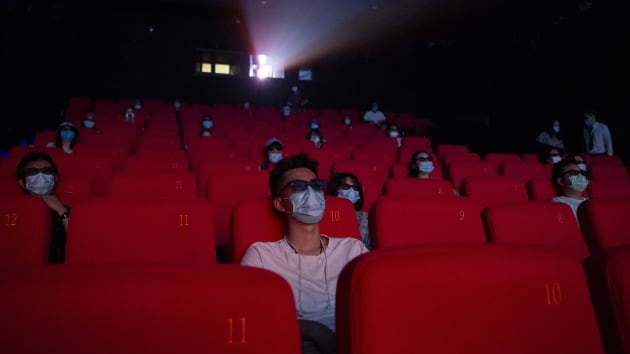
This week, the James Bond release was postponed to April 2021. That announcement acted like a nuclear bomb for the cinemas. Cineworld, world’s second biggest chain, closed all its 663 theaters. 40,000 employees in the USA and 5000 employees in the UK are in danger of losing their jobs. Odeon, the UK chain, declared many of its theatres will be open only on weekends.

James Bond rescues gorgeous women, British dignity, civil society, but this time his job was to rescue the worldwide cinemas. He failed.

*****

Since the beginning of the pandemic, most cinemas remained shut. Movie lovers grudgingly shifted to binge watching on Netflix or a similar platform. In places where cinemas opened, there was a 25-50% cap on occupancy for social distancing. Theatre owners were expected to invest in santisters, masks, improved ventilation, providing popcorns in pre-packed boxes, temperature checks. Viewers, despite everything, don’t feel confident yet.

Then Hollywood began cancelling releases. Cinema theatres live on blockbusters. Either the production or the release of Mulan, Black Widow, F9 (fast and furious), Wonder woman 1984 (Gal Gadot), Mission impossible: 7/8, Batman were postponed.

Warner brothers risked releasing “Tenet” in the summer. That was a guinea pig for Hollywood and for the exhibitors. In pre-covid times, the Christopher Nolan film would have grossed $50 million on the opening weekend, just like his previous films. It debuted over the labour day weekend, and still made less than $10 million. This scared the James Bond producers.

*****

The last Bond film, Spectre, grossed $879 million, 77% of which was made outside north America. It is a truly global series running for nearly sixty years. No Time to die has a reported budget of $250 million. In normal times, it would have earned $1.5 billion dollars, despite the falling standards of Bond movies.

But Hollywood’s mecca and medina, Los Angeles and New York are still shut. Bollywood’s Bombay is shut. Places which buy the costliest tickets are the worst affected by coronavirus. For once, James Bond decided not to risk it.

“We are like a grocery shop that doesn’t have vegetables, fruit, meat,” said Mooky Greidinger, the Cineworld CEO. “We can’t operate for a long time without a product.”

India, in its green zones, will open cinemas from 15 October with a 50% cap, and a long list of restrictions. It will face the same problems. Because Bombay is shut, the blockbusters will not be released. And without blockbusters, viewers don’t think the risk-reward equation works. (Some theatres in Europe and USA are showing classics. That niche is not helping them break even.)

*****

A question has been raised - will the pandemic kill cinemas? I don’t think so. Cinema is a different medium than the small screen. A visit to a cinema theatre is an event. You can’t possibly ask a new date to watch a movie together on your laptop. Movies like James Bond or 3-D movies are made for the giant screens. One can replay them at home or on a flight, it’s not the same. If the cinema theatres are shut for ever, so will James Bond.

China has recovered, new blockbusters are released. Chinese cinemas are full, their revenue gone back to pre-covid levels. That gives me hope the same thing will happen worldwide. I don’t fancy travelling to China to watch a Chinese James Bond.

Ravi 

Wednesday, October 7, 2020

Corona Daily 305: Big Brand Tyranny


Amazon acted fast. When the USA was in the grip of historic unemployment, Amazon hired 175000 warehouse workers. Though they were given zero-hour contracts, meaning contracts that didn’t guarantee a minimum number of weekly hours, Amazon paid them an extra $2 per hour until May. In June, a one time thank-you bonus of $500 was paid to full-time warehouse associates.

Jeff Bezos’s mind is on Blue Origin, the rocket company that one day will take him to the moon or mars. His other priorities are Alexa, which has 10000 employees working fulltime on it; and expensive Hollywood productions that can be watched on Amazon Prime. Online retail business is the cash cow. And yet, Jeff Bezos and the top bosses of Amazon spent every day discussing emergency covid strategies to maximise opportunities.

They were lucky to get more opportunities. Italians love to visit shops. Between March and May, more than two million Italians tried e-commerce for the first time. During the lockdown 75% Italians shopped online, sales grew 26% to a record 22.7 billion Euros. A sad Italian described the future of an Italian village as “a village with couriers and without shops.”

*****

The key reason for Amazon prospering, though, is that such brands have become monopolies, commercial tyrants.

Concentration of power is always dangerous. In politics, civilized societies create checks and balances. The law-makers, the governing powers, the judges, the media are expected to act as one another’s auditors. This is why a US president runs out of power after eight years. A president or a Prime Minister can be impeached or removed, or in extreme cases tried in courts. When politicians, even in democracies, attack the checks and balances mechanism, democracy gives way to dictatorship.

In business, this function was expected to be served by the anti-trust and anti-monopoly bodies. What do we see in practice?

With the Indian economy becoming liberal, Coca-Cola entered India, bought the company which made Thums-up, (a local Cola), which in every consumer research was preferred to Coca-cola. Coke bought Thums-up so as to stop its production. This is not how capitalism is supposed to work.

WhatsApp is an amazing invention. Billions fell in love with it for business and pleasure. As soon as it became successful, what happened? Facebook bought it. As soon as Instagram became successful, what happened? Facebook bought it. Anti-monopoly laws are not supposed to allow such acquisitions.

I have a few Apple devices in my house. Each device has a unique charger with a pre-programmed short life expectancy. And each charger is super-expensive. Unless I update whatever Apple wishes me to update, and digitally sign whatever it wants me to sign, my i-phone stops functioning. This is not how consumer protection is supposed to work.

Granted Bill Gates, Mark Zuckerburg and Jeff Bezos are geniuses who have revolutionized the world. That doesn’t mean they should be allowed to become business tyrants. Google, Amazon, Apple and Facebook are currently being investigated by the American Congress. Sweeping reforms and antitrust laws are being talked about. Unfortunately, those tech-monarchs have enough financial muscle to buy off protesting politicians.

***** 

Today, PriceWaterhouseCoopers and UBS, the Swiss bank, published a reportriding the storm”. In the pandemic, total billionaire wealth reached $10.2 trillion, an all-time record. Between April and July, the wealth of billionaires went up by 27.5%. The superrich benefited from the crisis, because they had “the stomach” to buy more shares when equity markets crashed. Shares in Amazon and other technology companies rose very sharply.

Concentrated, unchecked power in the hands of politicians or businessmen creates dictators. Amazon now qualifies as one.

Ravi 

Tuesday, October 6, 2020

Corona Daily 306: One Click Shopping


Sometime in March, I ordered a pack of Gillet fusion blades. Then India went into a lockdown for nearly two months. In June and July, I was still waitlisted for the blades. Finally, I cancelled the order. Amazon stocks more than 100 million items with a promise to deliver most of them in forty-eight hours. In the USA, more than 100 million households are Amazon prime members.

Amazon, like most of the world, relies on Chinese manufacturing. China is the largest source of consumer goods. Even when things are manufactured locally, they may depend on China. A factory in Sacramento, USA makes ketchup, but the tomato paste, bottles and caps are imported from China. Cowboy hats and cowboy boots ($85), classic American symbols, are exclusively made in China. In late January, China went into a lockdown and the country’s manufacturing came to a sudden halt for weeks. For the last thirty years, companies like Walmart and Amazon have focused on “just in time” by excelling in logistics. The stocks started depleting.

In February and March, toilet paper orders jumped 186% on Amazon, year on year. Cough and cold medicines orders went up by 862%. Americans started ordering popular card games for the lockdown. They were told Amazon couldn’t supply those games any more. In Europe, consumers were trying to order wine and ham, web cameras, printer cartridges, fitness equipment. Orders for standing desks and inflatable swimming pools, particularly for kids, went through the roof. But many of these items were out of stock.

Because when the Chinese manufacturing resumed, goods still needed to be shipped from China to the USA and other countries. The shipping industry had a labour crisis with thousands of workers stranded on the ships because their countries wouldn’t open the doors for them.

Packaging was another issue. What we order on Amazon is packaged in plastic pouches, bottles, aluminum cans, cardboard boxes, bubble wraps. All these materials must be manufactured as well, before a product can be shipped. The liquid hand sanitizer was produced in three shifts, but the bottle manufacturing lagged much behind.

Once the products and packaging were made and shipped to the ports, trucks must distribute them to warehouses and stores. But long-distance trucking had become complicated. Lockdowns had imposed serious restrictions on vehicle movement. The cafes and hot meal stalls on highways, so essential for the long rides, were shut.

*****

Workers at Amazon warehouses were falling ill or just staying at home. In the UK, unions called their working conditions “hellish”. In April, workers in the USA staged a mass protest demanding immediate closure of more than 50 warehouses with positive cases. Amazon fired six workers who spoke against the company. The reasons given ranged from vulgar language to not following social distancing. Tim Bray, the vice president, resigned disappointed with the level of toxicity in the company culture.

By 22 May, eight Amazon employees died of Covid-19. A lawsuit was launched against Amazon in New York on 4 June.

Last week, Amazon officially admitted a total 20,000 of its employees tested positive between 1 March and 19 September.

*****

Despite all this, Amazon became the biggest winner of the pandemic. Jeff Bezos, the richest man in the world, made $88 billion in the course of the pandemic. Sales went up by 40%, and profits doubled. As to how or why this happened, I will discuss in tomorrow’s article.

Ravi


Monday, October 5, 2020

Corona Daily 307: London Marathon at Home


Yesterday, on a gloomy, wet and dark Sunday morning, world’s marathon record holder for women, Brigid Kosgei, was woken up at 03.30 by her alarm. The English hotel she stayed at was allowed to host marathon runners exclusively. The elite men and women who run like cheetahs had been living in a bio-secure bubble for the past two weeks. Each athlete was tested every day. They were allocated a 40-acre ground for practice runs. Each wore a ‘bump device’ around the neck. If two runners came dangerously close to one another (meaning within six feet), both devices lit and emitted a loud alarm. The same device would later let runners know if anyone who came close to them had tested positive. During the training, runners were given individual changing rooms, and individual toilets. This was in London.

*****

Throughout yesterday, 43000 runners from 109 countries had set their alarms at their convenience. They had paid £25 to download an app (created by the Indian company Tata Consulting Services) that would track their time from start to finish. They could run the 42 km on the streets, woods, beaches, parks or even around their house. On crossing the finish line, as confirmed by the magical app, the runner received a digital certificate by email. In a few days, they will receive a branded t-shirt and an official London marathon medal by post.

*****

Like the grand slam venues in Lawn tennis, marathon running has six major races annually. London, Boston, Tokyo, Berlin, Chicago and New York. London has a beautiful route set on the river Thames, with views of the Tower of London, Big Ben, Buckingham palace, London eye. The race ends in St James’s park. The race is so popular, it’s difficult to get in. In 2019, 414000 runners applied, 56000 were accepted, and 43000 finished the race. The 50,000+participants and 750,000 spectators make the fourth Sunday of April a festival in central London. Well behaved crowds cheer the fastest men and women, uniformed volunteers stand with water bottles and sponges, medical staff is ready with sprays and stretchers.

This year, spectators were banned.

***** 

Except the Tokyo marathon that happened in March, all other marathons are cancelled this year. London marathon decided to allow only elites, a handful of men and women, the fastest, to run roughly 20 laps of 2.15 km each around St James’s park. Prizes were half of last year. Usually, the flat course allows world records.

English weather is notorious. Yesterday, the marathon coincided with Storm Alex. It rained from start to finish, a unique and unpleasant experience even for the elite runners. Instead of spectators, large cardboard cutouts of the Queen, Prince Charles, Prince William were placed along the route. (Don’t know how that helps the runners).

Kenya’s Eliud Kipchoge, who for the last six years has won every marathon race he took part in, had his right ear blocked 15 km before the finish line, and it didn’t open. He came eighth. Kenya’s Brigid Kosgei, though, won as expected.

No matter where a race is, the winners, both men and women, are from Kenya or Ethiopia. It was the same, with one exception. An American white woman came second, a performance that showed to the world that “white runners matter”.

*****

Those who ran the virtual marathon enjoyed the race more, with the start time, pace, and route all decided by them. In 2021, London marathon will happen again in October. Encouraged by the response, the organisers have made the entry fee for the virtual marathon £125 the next year.

Ravi 

Sunday, October 4, 2020

Corona Daily 308: Founding Father’s Flu


Illnesses of American presidents often change the course of history.

George Washington, the founding father, managed to experience malaria, smallpox, tuberculosis, dysentery, boils, loss of teeth (because he tried to break almonds) deafness, infertility, tonsillitis, depression, skin lesions, epiglottis and other ailments. We must remember Washington lived in the 18th century when illness was a default health setting. An accomplished horse rider and a fantastic dancer, Washington was fitter than this list suggests.

In 1789, an influenza epidemic started in New York, the temporary capital of the newly formed nation. Washington escaped the first wave. However, in late spring 1790, during the second wave, he “imprudently” set up a meeting with his advisor, James Madison. Two days later, Washington had difficulty breathing, sharp pains in the side, harsh coughing and blood in his spittle. Flu later combined with pneumonia.

Washington is the only US president not to have lived in the White House. (It was built after his death). When his health seriously deteriorated, a top doctor was smuggled into his house to avoid panic. But the grapevine was strong and people began speculating about his health. Washington’s personal secretary ran the government for a few weeks. In May, Washington took a turn for the better. He remained a president for another seven years, and died in 1799.

In 1790, the new constitution had no provisions for the incapacitation or death of a president. Historians believe Washington’s death in 1790 would have meant the United States dying along with him. The nation was still in its infancy.  

*****

In 1919, Woodrow Wilson caught the Spanish Flu. He still went for the critical post WWI negotiations to Paris. At the negotiating table, he had a high temperature, labored breathing, was disoriented and suffered hallucinations. His doctor lied telling the press the president had caught a cold from the Paris rains.

The French demanded war reparations, and military buffer zones with Germany. In his delirious state, Wilson accepted demilitarization of Rhineland and agreed to the French occupying it at least for the next fifteen years. The Treaty of Versailles negotiated by Wilson was so harsh and one-sided; it fuelled angry German nationalism, and contributed to the rise of Hitler and the Nazis. Back home, the ill president began campaigning for the League of Nations (predecessor to the UN). In September, he suffered a massive stroke and was paralyzed on the left side. His wife secretly became the de-facto president. Congress rejected the League of Nations. A healthy president might have succeeded in forming the League and avoided another world war.

***** 

During the Second World War, Franklin Roosevelt, Stalin and Churchill were expected to meet to create a strategy to bring peace and freedom to Europe and the world. Stalin was paranoid about flying; he took only one flight in his entire life. He claimed his doctor didn’t allow him to travel to the USA.

Roosevelt, paralyzed with polio (which he always tried to hide), weak with congestive heart trouble, and with blood pressure 260/150 flew 6000 miles to Yalta, a resort in Crimea. In the negotiations Stalin managed to grab parts of Poland and bring chunks of Asia under the Soviet sphere, by promising free and fair democracies in those nations. Roosevelt went home and boasted of achieving global peace. Roosevelt was so weak; he gave the speech sitting down.

It may sound incredible but Stalin was a much bigger liar than Trump. He reneged on all his commitments, installed a Communist government in Warsaw. He accused the USA and UK of making a secret pact with the Nazis. The division of Europe and the Cold War began. Roosevelt died two months after the Yalta conference.

*****

Ravi